A woman ensnared by profound sorrow and a misaligned sense of duty, bound by the constraints of her time. Is it not high-time we reconsider how we read this deeply misunderstood heroine?
When I first encountered Shakespeare’s Macbeth, I was beguiled by the trickery and deceitful nature of the leading lady. But as time yawned on and years were added to my counter, as experience shaped my perception of the world, I came into contact with a different Lady Macbeth; a woman whose loss and service to her kingdom destroyed the very essence of herself.
This all sounds so very dramatic, and in some ways I suppose this is fitting for an analysis of a Shakespearian character. Yet, in others I suppose I could tone it down a level or two, but in fairness to this great character, I won’t. I will make no apologies for my musings on this woman, and if you’ve read this far, you may as well strap in.
At the tender age of 27 I lost my first child to miscarriage. Three years later and I lost my second child again to that timeless sardonic joke; to bear a child but not birth one. But, it wasn’t until I brought my third child to term that I was able to read the profound sorrow buried deep within the inference of Lady Macbeth’s words. It was here, having experienced the unnatural loss of a child and felt the heavy weight of societal duty, I was finally unable to stomach the chalky depiction of the modern reading of a such a beautifully flawed character.
The stereotypical reading of Lady Macbeth is that of a power-hungry, deceitful wife who is driven to madness at the hand of her own self-inflicted guilt. Now, I’m not suggesting that there is no foundation to this interpretation, but I am suggesting that it is basic and misaligned. We read her in such fashion because our focus is on Macbeth and therefore she is secondary in her development – she is his possession, his wife, his Lady. Given that she doesn’t have ownership of her name reiterates the assumption that she is not meant to be read as a separate entity, but merely a convenient scapegoat for blame. She is Eve after all.
But what if we take her as a character with flaw: with moveable parts, with the capacity to grow and live in a world of her own? What if we stop reading her through the lens of masculinity at the feet of a patriarchal society, and instead read her through the feminine perspective? She is a woman who has had a succession of male-led societal expectations thrust upon her. So much so, the woman begs to be ‘unsexed’ merely to give herself the courage to do what is expected of her male counterparts; to be violent and brave because as a woman she is not permitted to act so selfishly.
This in itself is a crucial point to ponder. She wants to see progress and fulfilment in her life, yet has no power to bring it about herself. Okay, I admit, killing may not be the best way to do it but who am I to judge the negotiation processes of 11th century Scotland.
She is expected to act selflessly and in service of her husband. She is expected to bear him an heir or her standing in her world is worthless. Yet, we condemn her for her innovation and skill; we condemn her for persuading her, all to willing, husband to do it for their own betterment, even though all other avenues have been severed for her. Would we hold ourselves, our daughters, to the same, dare I say it, barbaric standards; standards that state a woman’s sole role is to serve her husband and bear his heirs?
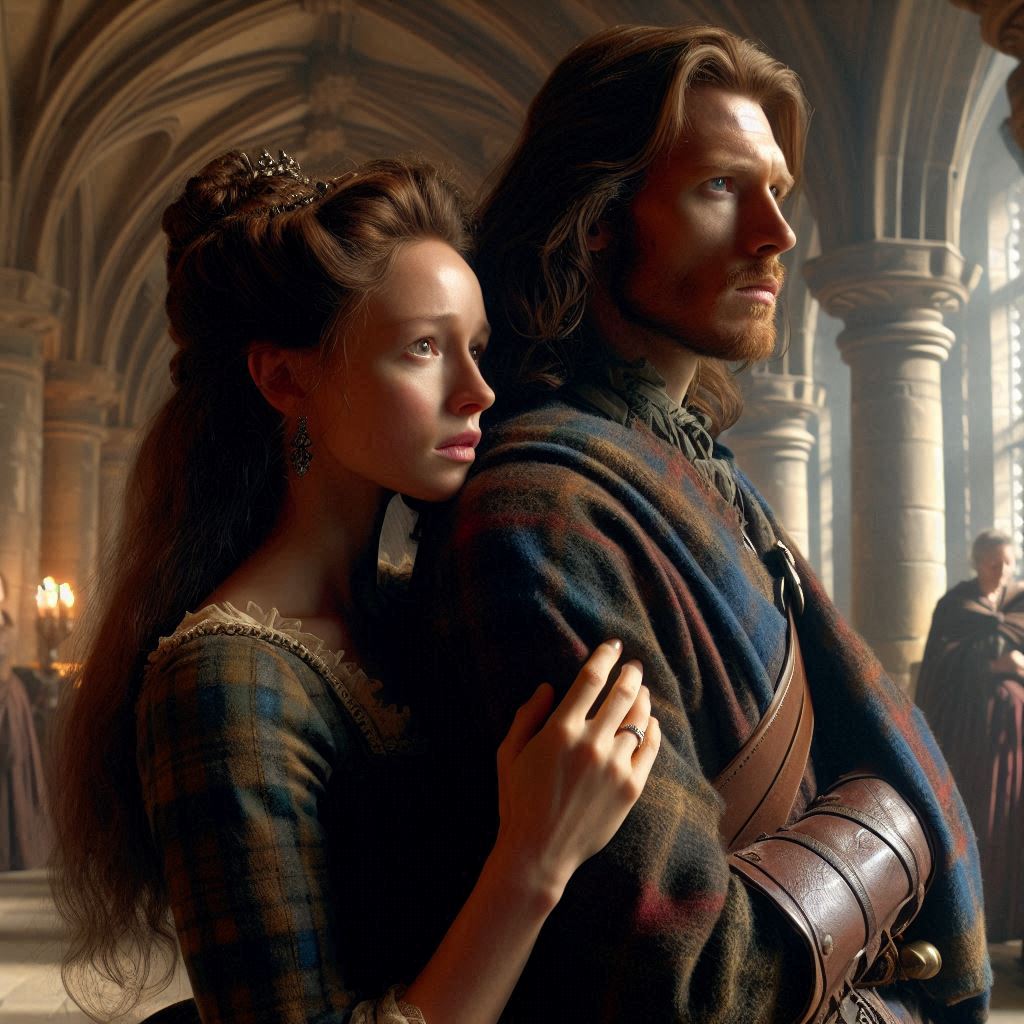
Lady Macbeth, The Anti-Mother
I once read an analysis of Lady Macbeth that promotes her as the ‘murdering mother’ who was ‘fantasing infanticide’, and it irked me. Yes, Shakespeare did write that she was willing to ‘dash the brains’ out of her supposed infant child, but did she really mean it or was she an infuriated woman, pointlessly arguing with her lily-livered husband and saying whatever she could to make her point crystal clear to him, because evidently asking him to kill the king didn’t work, did it?
We spend the majority of the play with Macbeth, our anti-hero, justifying all of his killing and praising him for his bravery throughout and even in his final moments. Yet, Lady Macbeth says one thing in a heated argument and she can never live it down. Bit harsh.
What if, instead, we viewed Lady Macbeth as a woman who had given everything and had everything that was ever expected of her. A husband, a home, a child. For this to then be ripped away from her, leaving her with nothing but empty halls and a relationship in tatters. What if we read her as a woman in the throws of ultimate grief, having buried her infant child?
With that in mind, let’s take a closer look at her infamous baby brains speech in Act 1, Scene 7:
I have given suck, and know
How tender ’tis to love the babe that milks me:
I would, while it was smiling in my face,
Have pluck’d my nipple from his boneless gums,
And dash’d the brains out, had I so sworn as you
Have done to this.
This is a woman in turmoil, a woman scared by the passing of her child, with a husband who is breaking his promises to her – these promises meaning more to her than anything else. All she has left to give is the support of her husband and the glimmer of a new life, a glimmer that has the power to pull her from her stupor and give her purpose to replace that of the one that was untimely ripped from her arms.
Some have argued that she is speaking in metaphorical terms, supported by the infanticide laid bare in throws of an argument. But look closely at the present perfect tense here, ‘I have given suck.’ This isn’t the words of a woman who is talking in ifs and buts, but the words of a woman with the unsettling reality of experience. Look at how she goes from ‘the babe’ to ‘it’ to ‘his’ – she is remembering a time past, the raw feeling of her son’s warmth against her chest as she breastfeeds him and his smile as she looks down, locking into his gaze. She returns finally to ‘the’ when the spell of a wished reality is broken and the infanticide is used as a method of persuasion.
The first three lines of the excerpt is spoken in the passive sense. She talks about her son in terms of endearment, how he milks her and not that she feeds him. She is reflecting on her service to her child, her responsibility for another life. But, that memory shatters and she returns to the business at hand.
This a painful scene to watch unfold. Every time we are given a glimmer of her true self she feels the need to mask it, almost immediately, with an overtly masculine response – stripping herself of all maternal instincts because they are too painful to live with.

Lady Macbeth, The Traumatised Mother
Rewind to Act 1, Scene 5 in her ‘unsex me’ speech, specifically the lines:
Come to my woman’s breasts,
and take my milk for gall.
On it’s surface, yet another example of her desperate desire for power. But underneath this is an extension of her loss and heartache. A mother so distraught by her inability to protect and raise her child that she would rather her ability to sustain life be either swapped for typical masculine traits or turned sour and bitter.
Lady Macbeth’s self-loathing, a product of her inability to process the trauma she has fought through, in a time that had limited knowledge of mental health and postnatal depression, would corner her into festering on her desire to be as far away from what it meant to be a woman. In her eyes, she was not fit to be a mother; she failed in her duty to protect her child. This constant inner battle with her responsibility in her child’s death is what leads her to these acts of atrocity as she desperately attempts to salvage the only legacy she can afford Macbeth, his place on the throne.
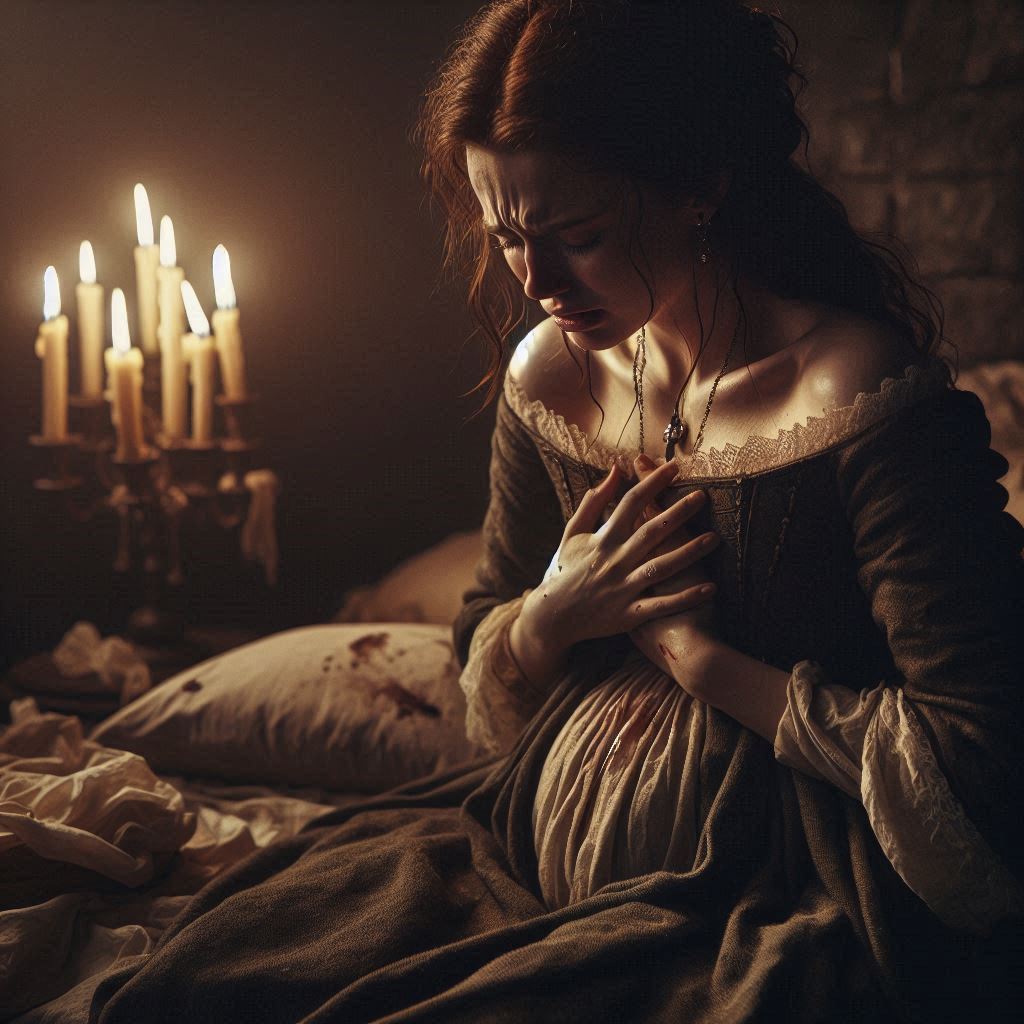
Lady Macbeth, The Nevermore Mother
Right, so let’s skip to Act 3, Scene 1 a place that Lady Macbeth has no voice but whose presence seeps between the lines:
Upon my head they placed a fruitless crown,
And put a barren sceptre in my gripe,
Thence to be wretched with an unlineal hand,
No son of mine succeeding.
Let’s not even get into how everything is everyone else’s fault and never Macbeth’s. Instead let’s focus on the metaphorical significance and biblical allusion, specifically how they ultimately align with the moral dichotomy of the play.
The prophecy depicts that Macbeth’s kingship will be empty and meaningless without a legitimate line of successors. But who is to blame for this barren sceptre, for this fruitless crown? Here, great cavernous cracks begin to reveal themselves in the relationship of the Macbeths. His lack of accountability firmly places the weight of responsibility, specifically their lack of heirs, in the lap of Lady Macbeth. It would be unliterary of us to think these musing would cease at the end of the page turn and not ingrain themselves deep in the psyche of Lady Macbeth, forming the development of her character.
The fruitless crown and barren sceptre become but another pillar in the hubris wasteland that Macbeth is shredding in his wake. Which is where Psalm 107:34 comes in: a cautionary tale that explains the transformational power of God turning fertile land into barrenness when His people turn from Him.
Let’s for argument sake change God into Motherhood in this segment. This imagery of fruitless crowns and barren sceptres exasperate the unappreciated value of motherhood. Something that was bestowed upon Lady Macbeth. But, when this was taken from her, left her with nothing but emptiness and an inability to produce an heir, particularly when her husband turns his back on her, emotionally speaking. Look how he slowly phases her out as the play progresses.
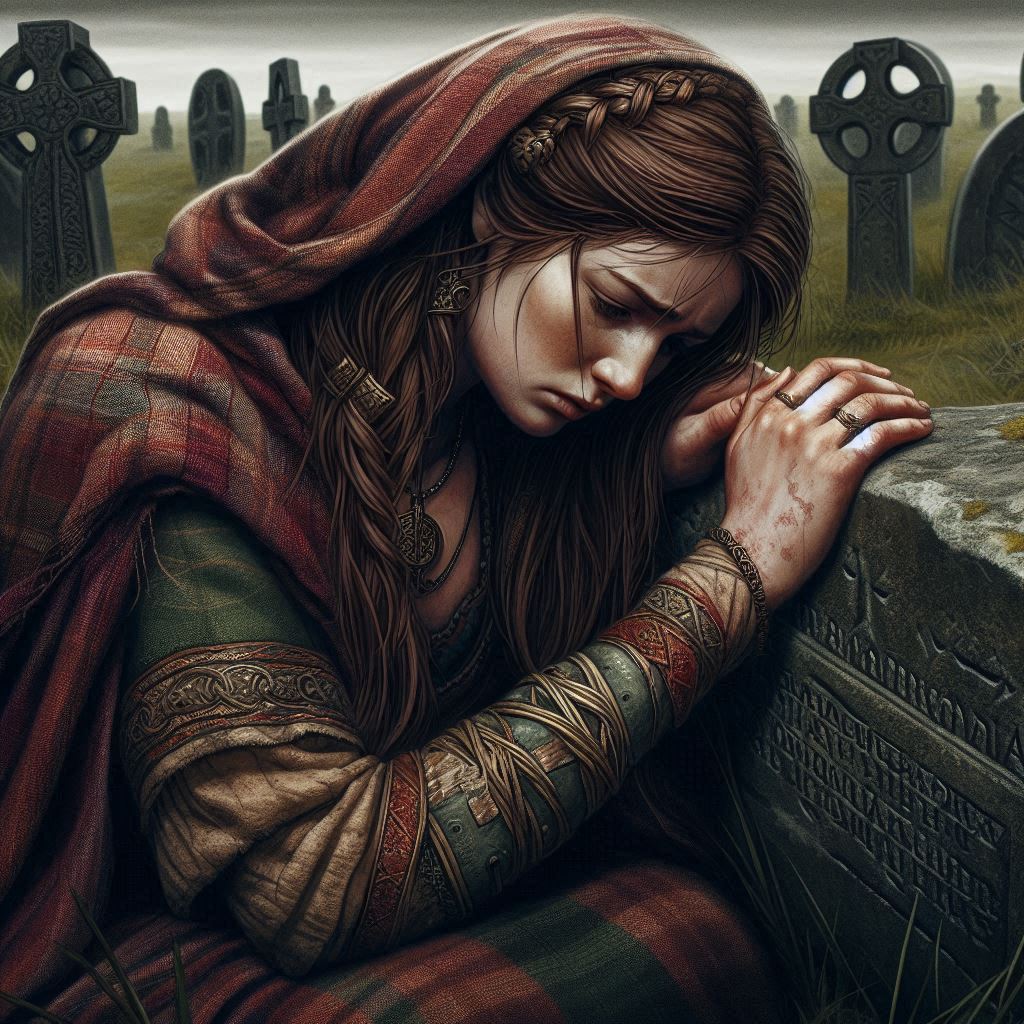
Lady Macbeth, The Genesis Mother
On the theme of biblical allusion, let’s consider our beginnings (in accordance with Christianity)…
As scholars we are aware of Shakespeare’s obsession with demonstrating his intellect, particularly by interweaving elements of biblical whispers throughout his work. This is no more relevant than the uncanny parallel between Adam & Eve and Macbeth & Lady Macbeth.
But once again, an oversight of the nature of these women trickles into their narratives. We are supposed to read these women as deceivers, as selfish entities, whose only mission is to trick the unsuspecting males into acting upon original sin.
Let us first look at the damnation of Eve in contrast to that of her husband: Eve is viewed as the bringer of the downfall of man, not Adam. She, although deceived and manipulated by another, is perceived as the one who altered God’s word to bend to her own desire and the one who disobeyed God. Whilst Adam on the other hand is positioned as one to be admired in his disobedience – he ate the apple because he loved her and wished to share in her punishment so she would not be alone. How noble a sin. This would infer that Adam did not crave the power of knowledge, but only desired to be loyal to his wife, thus making him infallible until the ruin of Eve.
Macbeth is painted in much the same light – let’s not forget ‘brave Macbeth,’ ‘valiant cousin,’ ‘worthy gentleman.’ Such a man could not possibly commit such atrocities against the crown. But Lady Macbeth on the other hand, who is depicted as the epitome of evil, has no such issue with murder or bloodied ambition. Right?
If this is the case then why, truly, does she falter in killing Duncan?
Had he not resembled
My father as he slept, I had done’t.
(Act 2, Scene 2)
Let’s look at it this way, this a woman who had the forethought and organisation to lay the daggers out for her husband and of course, drug Duncan’s guards. Who is so brutal as to ask the spirits to rip her of her womanhood. Who so freely speaks of viciously bashing her child’s brains out.
Or perhaps, it is that the knowledge of moral dichotomy plagues her and makes her fallible. It makes her human. It renders her incapable of the committing a sin that would place her within the ninth circle of hell. Remember that this is a woman who would be infatuated with the afterlife and could not risk first-hand treachery.
If Macbeth is designed to be infallible then why is he so easily manipulated by the lust for power, something he should be armoured against as a humble servant of Duncan? It is impossible to place Lady Macbeth on trial for the entire failings of mankind at the mere suggestion of action. But as mother, it is her responsibility alone for the success of her family line – a burden that is not readily admired by others. Therefore she feels accountable for his actions, his mistakes.

Lady Macbeth, The Guilty Mother
Finally, we bear witness to a woman who is terrorised by the crimes of her husband (Act 5, Scene 1):
Out, damned spot! out, I say! – One: two: why,
then, ’tis time to do’t.–Hell is murky!–Fie, my
lord, fie! a soldier, and afeard? What need we
fear who knows it, when none can call our power to
account?–Yet who would have thought the old man
to have had so much blood in him.
The thane of Fife had a wife: where is she now?–
What, will these hands ne’er be clean?–No more o’
that, my lord, no more o’ that: you mar all with
this starting.
Wash your hands, put on your nightgown; look not so
pale.–I tell you yet again, Banquo’s buried; he
cannot come out on’s grave
To bed, to bed! there’s knocking at the gate:
come, come, come, come, give me your hand. What’s
done cannot be undone.–To bed, to bed, to bed!
Oh, this woman! In her earnest to be the woman that is expected of her, she takes on the responsibility of her husband’s desire and it’s venomous burden of guilt. She lays blame at her own feet, but why? She did not plunge the dagger into Duncan’s chest nor hire the assassin to slay her husband’s best friend, or even pursue the severing of the Fife line.
She used the power of language to enable her husband to act upon his desire, his will. Nothing more. Whilst her ramblings are that of a woman descending into the chaos of darkness, she unconsciously dedicates a whole portion of her guilt on the destruction of a family – she cannot bare to focus on the murders of the children but instead focuses on the wife of Fife. She is finally at the edge of her despair, from losing her own child to taking blame for the loss of another’s.
A woman bound by obligation, destroyed by duty and tortured by actions not of her own. Forever in purgatory.
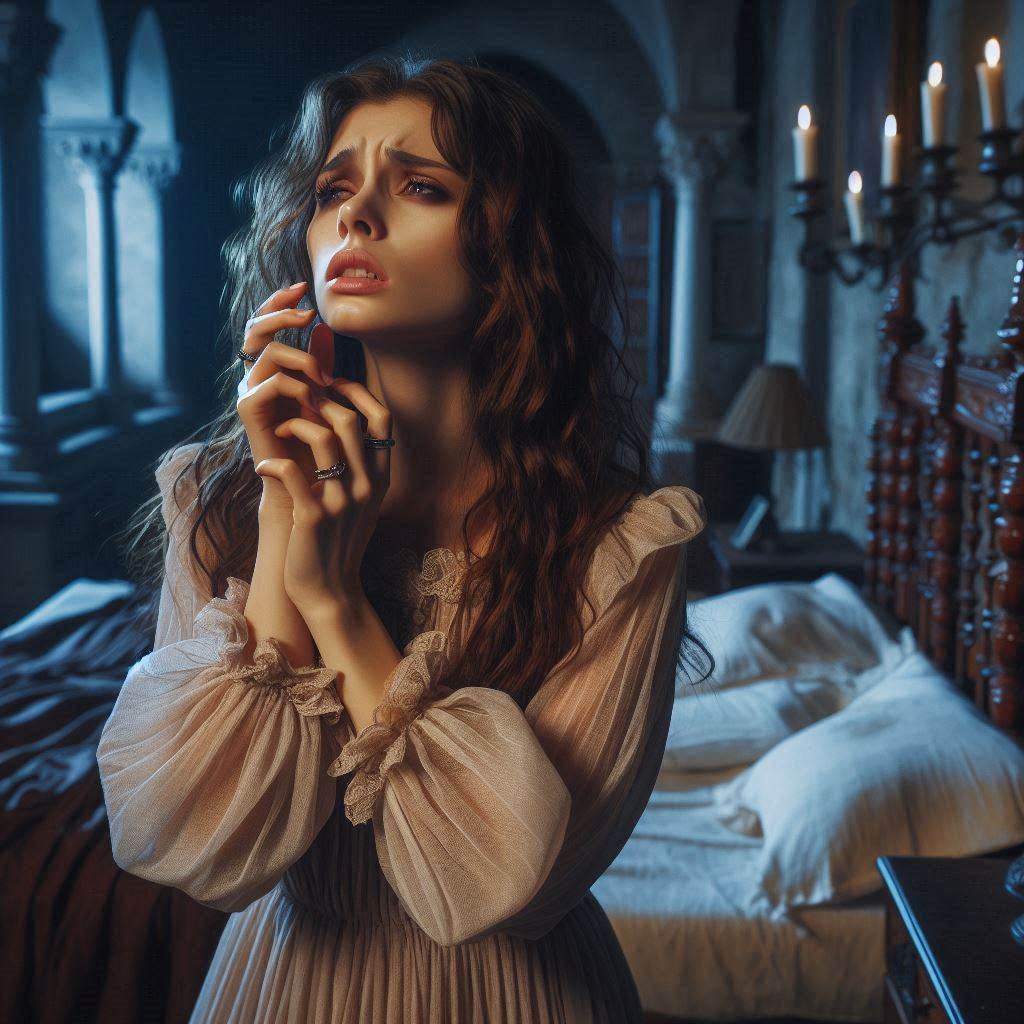
Rather than perceive this beautifully complex character as a flat-pack rendition of the epitome of evil, I believe it is high time that she is discovered in her own right for all the flaws and awes of her perfectly fallible self.
To Lady Macbeth, from a fellow fallible woman.
 A Scouser's Guide to Education