Over recent weeks I have witnessed teacher after teacher question whether or not a Masters in Education is worth the time, money and effort required for an improved chance at career advancement.
Thinking through what I had to offer on this topic, the greatest advice I can give is to share my experience of completing a Masters and the direct impact it has had on my professional development.
From the very beginning of my career, I have been baffled by the disadvantage gap and the possibility of a child’s future being hindered because of their economic status. As a child, I grew up with separated parents, surrounded by friends with ‘unbroken’ families, and faced some of the challenges that I see so many of my students face on a daily basis.
But, there is one moment in particular that I distinctly remember in facing the discrimination that many of our disadvantaged students face. During my second year of sixth form I was told that I had to attend a different school for my drama lessons. I was instantly meet with disdain, feeling completely out of place amongst the ‘rich kids’ of my area. During a lesson, in a room full of my peers, I was forced to explain my intended absence from an optional theatre trip due to work commitments. The teacher immediately confronted me expressing her disgust at my mother’s inability to pay for my little luxuries and was utterly appalled that I was choosing to work over attending the trip. For the first time ever, I was directly embarrassed by my social class and economic status.
It’s moments like this that fuel the fire in our bellies. When I began teaching I wanted to decimate this strand of discrimination. But, I knew very little about the reasons and statistics behind disadvantage, which led me to completing my Masters in Education on this very topic.

The research I read and conducted during the year (I luckily had the opportunity to do a conversion course with my PGCE credits) helped to consolidate my knowledge on the topic and gave me a greater insight on the detrimental implications of economic disadvantage on academic success.
Through the backing of my colleagues, I was able to ensure that the lessons learnt from my research were put into practice. This then improved my professional portfolio and provided me with the opportunity to deliver in-house CPD, sharing key strategies that could be implemented instantly by teaching staff.
After this exposure, I was asked to deliver CPD sessions on various areas of my practice and other projects I had been leading on. This gave me the space to work on my public speaking skills and gain a knowledge of different subject areas around the school. Through my work with disadvantaged students, I was able to confidently apply for the role of Deputy Achievement Coordinator as an RQT. I succeeded in securing the post.
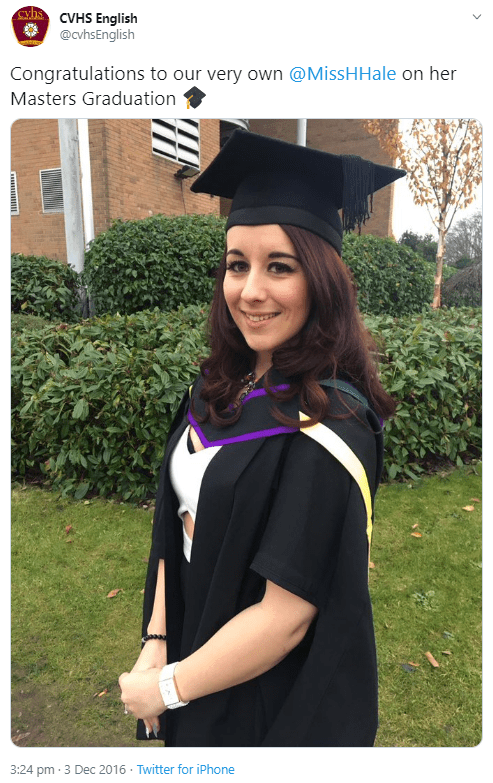
In 2017, I moved schools for the role of Assistant Curriculum Leader in English. During the interview, a keen interest was placed on what I had learnt from studying for a Masters and the project in particular. They were less interested in the degree itself but more focused on my takeaways – the actual strategies and knowledge I had gained, including how this could be applied to their setting. It was here that I began to widen my experience of CPD delivery, ranging from optional attendance to whole school training. Given the passion I have for eradicating disadvantage, I continued to work on projects that would improve the outcomes for these students, pushing me towards the role of Pupil Premium Leader. The topic and research outcomes of my dissertation was a leading factor in me securing the post, as I had a more refined understanding of the needs and responsibilities required of the role. Since then, I have delivered talks at several external conferences on the area of disadvantage, further improving my professional portfolio.
Although my Masters has had a huge impact on my career advancement it is by no means the only factor. So although, yes, I would advise that a Masters in Education is worth it, I would add the caveat that getting the topic right and investing your time in a project that you are passion about are key things to consider.
Knowing your strengths and weakness plays a big part in this process. Being able to acknowledge the areas you need to improve on whilst using your strengths to support your progress is a vital component in making positive steps towards your desired role. For me, emotional resilience and self-confidence have been areas that I have had to address over the years to ensure I outwardly present the confident, knowledgeable professional that I know I am.
One final point…
To that teacher who berated me for my background, this is me and my mum at the first of my three graduations.
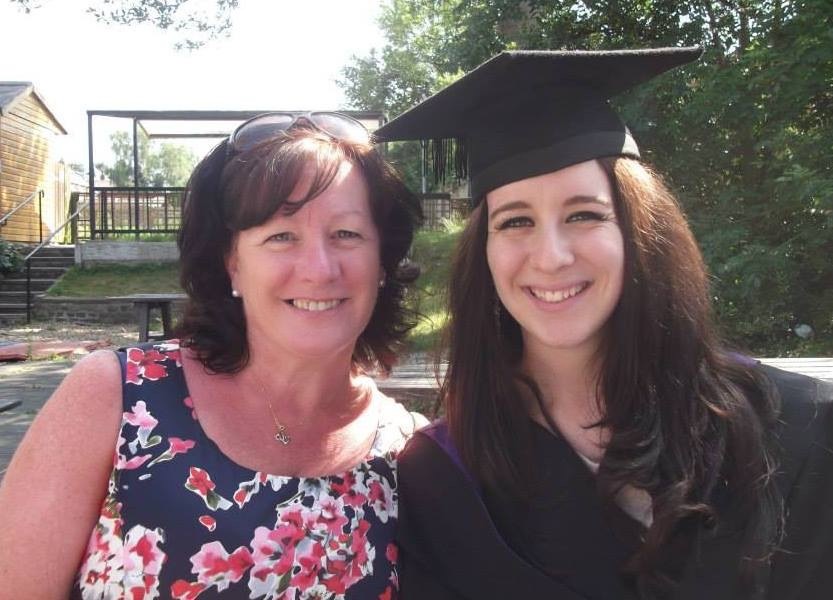
Her wonderful guidance and desire for me to learn the value of a strong work ethic is what has inspired me to become the teacher I am today.
 A Scouser's Guide to Education